01 / OPPORTUNITY
Opportunity Awareness
Recognize context that may point to an elevated reproductive opportunity.
An opportunity to pay attention.
A new layer of awareness
Reproductive contextual intelligence.
AI and smart eyewear, bringing personal context into the moments that matter.
Designed for a more aware everyday.
01 The Ovutect Context Engine
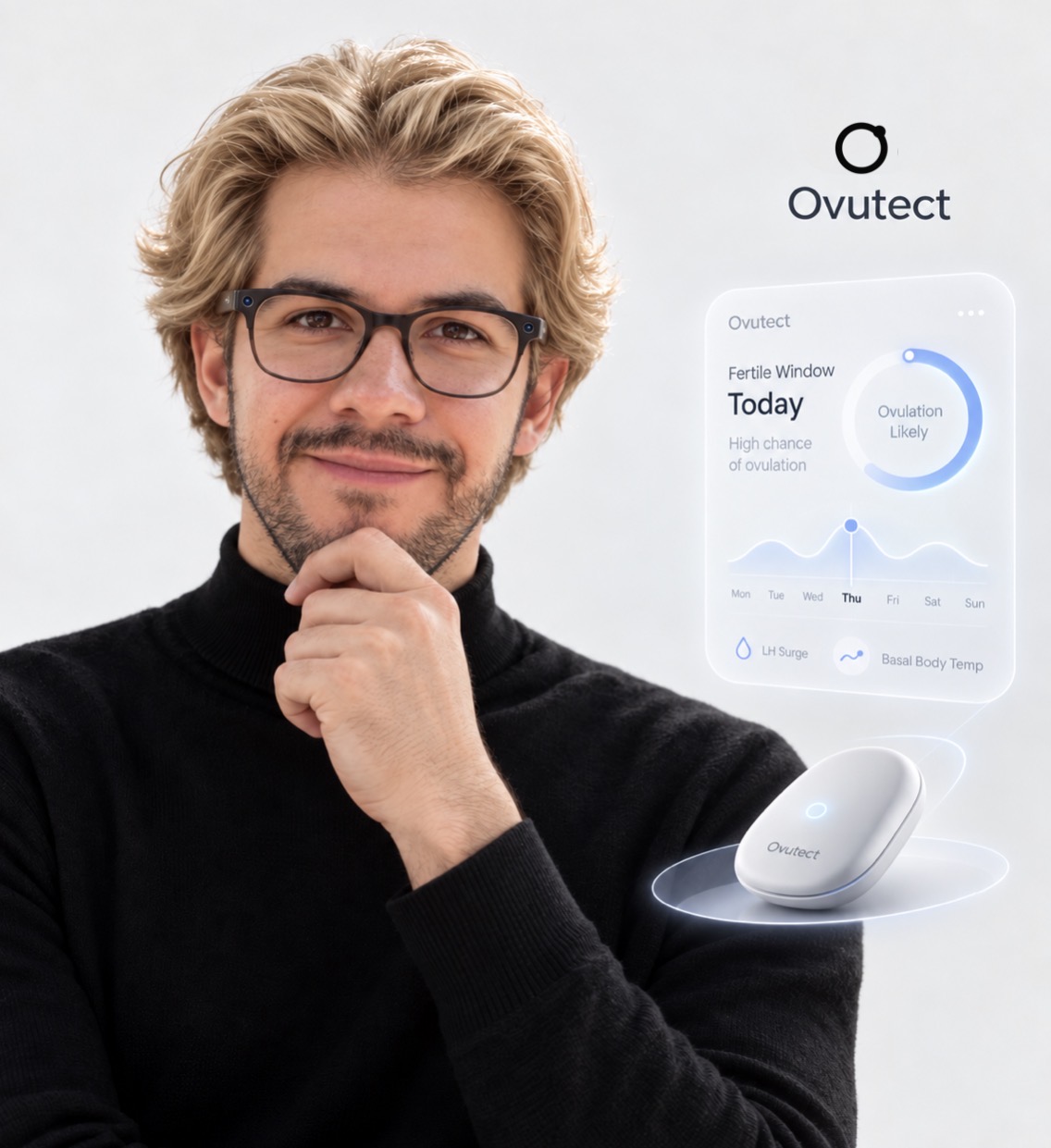
One signal rarely tells the whole story. Ovutect’s AI engine is designed to bring biological and situational signals together, turning fragmented information into useful reproductive context.
Warning: Ovutect can only detect the ovulation phase within the menstrual cycle, as menstrual-phase detection has already been patented by The Hershey Company.
02 Two types of awareness
Recognize context that may point to an elevated reproductive opportunity.
Recognize context in which the possibility of pregnancy should not be ignored.
Different perspectives on probability. Neither is a prediction or a guarantee.
03 The smart eyewear experience
Built around a simple idea: the right context should appear when it matters, then get out of the way. A discreet layer through compatible smart eyewear.

Precaution advised.
A moment for awareness.Concept demonstration. No live signals are being analyzed.
04 The Ovutect Story
Every great company
starts with an idea.
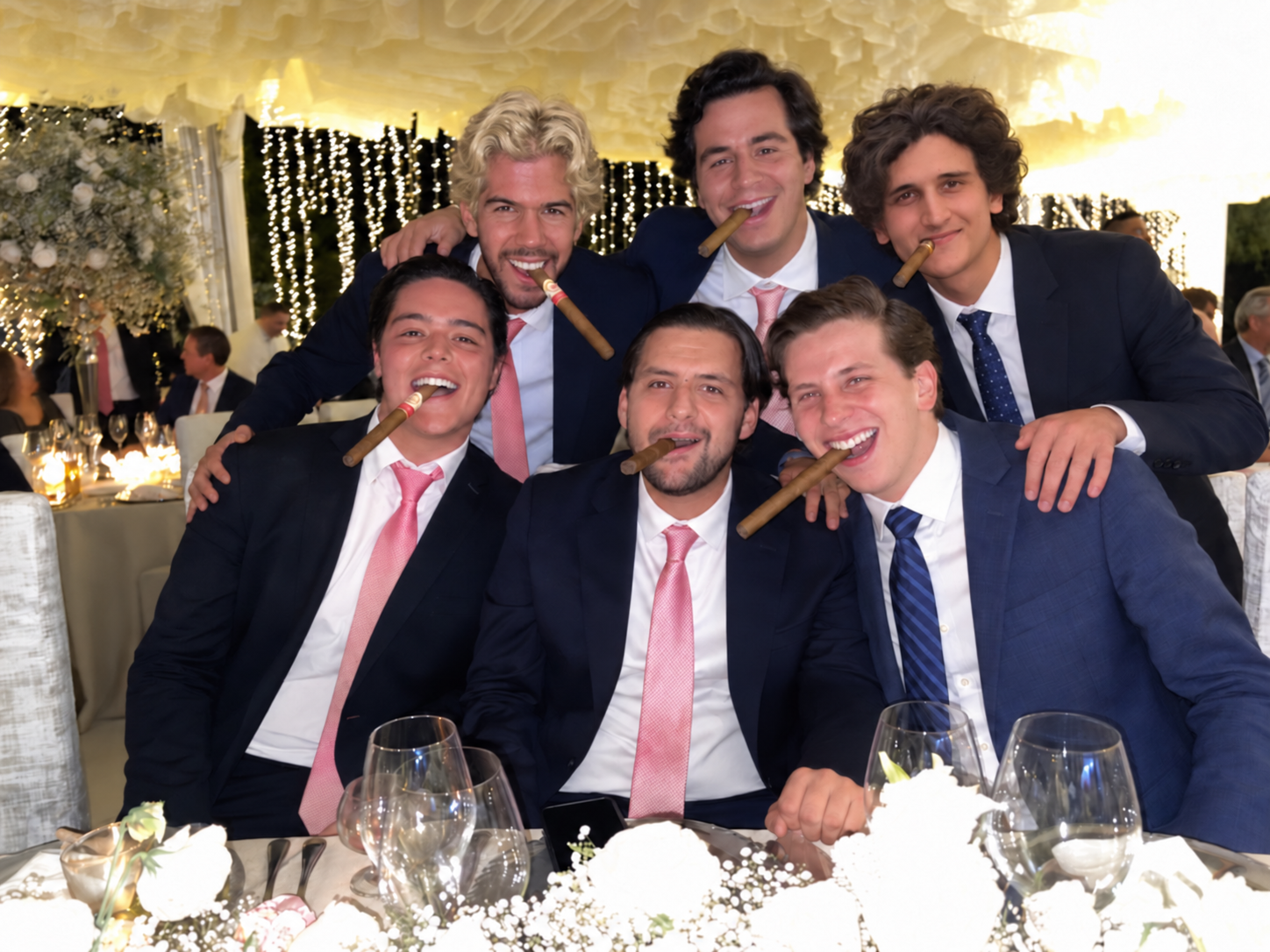
Ovutect started with six people who, through completely different paths, became convinced they could permanently change the way people understand human connection.
But the Ovutect story actually begins much earlier.
Alberto “Faz” Orozco, Álvaro “Minus” Capdevila, and Pablo “Pop” Alarcón already knew what it meant to build something big.
Years earlier, they had founded Soaking Inc., a company that quickly became one of the most unexpected success stories of their generation.
Its growth was explosive.
Eventually, Google acquired Soaking Inc. for approximately US$2 billion.
After the sale, the three decided to temporarily step away from the business world.
What followed was an unconventional sabbatical.
They revisited and did missionary work in Chiché di Loree at Africa, and attended an intensive seminar on emerging technologies and the socially responsible use of artificial intelligence.
For several months, they had no intention of starting another company.
Then someone from their past resurfaced.
Luis “Wilo” Goñi had been one of their university classmates.
They had heard little from him since he began developing experimental jaw-correction technology as his final graduation project.
For Wilo, the project was deeply personal.
His then-fiancée, Marianne Camachu, suffered from a severe jaw deformity, and Wilo was convinced he could find a solution.
He never managed to make the technology work.
The pressure surrounding the project eventually damaged his relationship with Marianne and ultimately led to the end of their engagement.
But failure did not change one thing:
Wilo remained convinced that he was meant to build something capable of changing people’s lives.
Years later, he approached Faz, Minus, and Pop alongside his brother, Francisco “Corro” Goñi, a specialist in finance and accounting.
They had an idea.
An idea that, technically, seemed impossible.
Wilo knew he could never build it alone.
But looking at the team beginning to form around him, he believed he might not have to.
That was the beginning of the first Ovutect prototype.
The roles began to form naturally.
Wilo became CEO, responsible for the overall vision of the company.
Faz took over as CFO, responsible for keeping financially viable a company that constantly tried to do things that, on paper, should not have been financially viable.
Minus became CTO, turning the team’s ideas into real operations.
Corro became CAO, building the company’s accounting structure from the ground up.
Pop became CCO, leading commercial strategy and developing the relationships necessary to bring the product into new markets.
After months of testing, failures, and sleepless nights, it finally happened:
Ovutect worked.
But building the product only solved half the problem.
Now they had to sell it.
And for that, they needed one more person.
Patricio “Phato” Alcocer had started his career as a simple salesman at a company that sold chlorophyll.
But he quickly realized that his real talent was not simply selling products.
It was giving them an identity.
Phato left the company and began working independently as a branding consultant.
Over time, he helped develop brands such as Motocicletas Lobo, Nintendo’s Mario Kart, Pu’Tennis pickleball paddles, and the Mary Fernandz perfume line.
Completely different products.
All connected by one thing:
Phato understood exactly what they could become.
For Ovutect, he seemed like the perfect person.
There was only one problem.
Corro and Phato had history.
Years earlier, they had worked together at Arancha, a company that eventually went through a hostile takeover orchestrated by Paul Flowers.
Phato had always believed that Corro knew about Flowers’ plan in advance and never forgave him for failing to warn him.
Their friendship was nearly destroyed.
So when the Ovutect team attempted to bring Phato on board, the first meetings were tense.
Very tense.
But the team was not willing to give up.
The solution eventually came far away from any office.
A retreat.
A hike through the mountains of Ñañel.
And a six-pack of “chelitas.”
Hours later, Corro and Phato finally talked openly about what had happened at Arancha.
They did not erase years of resentment in a single night.
But it was enough.
Phato agreed to join Ovutect as CMO.
The team was complete.
One of Phato’s first proposals would completely change the trajectory of the company.
Ovutect needed to stop feeling like a piece of technology.
It had to become something people actually wanted to use every day.
Phato proposed a collaboration with Ray-Ban.
The combination of technology and design became instrumental in creating the Ovutect identity that exists today.
But getting there was far from easy.
The company dealt with payment problems involving suppliers, internal debates about the limits of the brand, and difficulties finding partners capable of operating under the technological standards the product required.
Then came the Ruvial Affair.
During a critical stage of development, a man named Alberto Ruvial appeared claiming to be the medical representative required for the company to move forward with certain processes.
For weeks, he managed to convince several people that he was acting legitimately.
He was not.
Ruvial was impersonating Francisco Shen, the actual representative.
When Shen discovered what was happening, he worked with the team to untangle the situation and stop the attempted fraud.
Ruvial ultimately faced the authorities and was later imprisoned.
The company survived.
Just as it had survived everything before it.
All of those events eventually defined something much more important than the product itself.
They defined the mission.
To make people’s lives easier by giving them information they simply did not have before.
Ovutect uses real-time analysis to help users understand whether the timing may be right to expand their network of human, social, and even romantic connections.
It does not make the decision for the user.
It provides visibility.
Pop often explains it through an unconventional analogy:
Ovutect is like a radar during a hunt.
The radar does not shoot.
It does not choose the target.
But it allows you to see what was previously hidden.
That visibility can help the user make better decisions, identify opportunities, and protect themselves at the same time.
The vision began growing much faster than expected.
Faz and Minus brought Ovutect into the hands of major football organizations, including opportunities involving teams such as the San Francisco 49ers and the Minnesota Vikings.
The idea was simple:
Even athletes operating under extraordinary levels of pressure need opportunities to disconnect, relax, and regain confidence before their Big Day.
Ovutect was beginning to prove that the technology could be used in situations its own founders had never imagined when they built the first prototype.
The founders
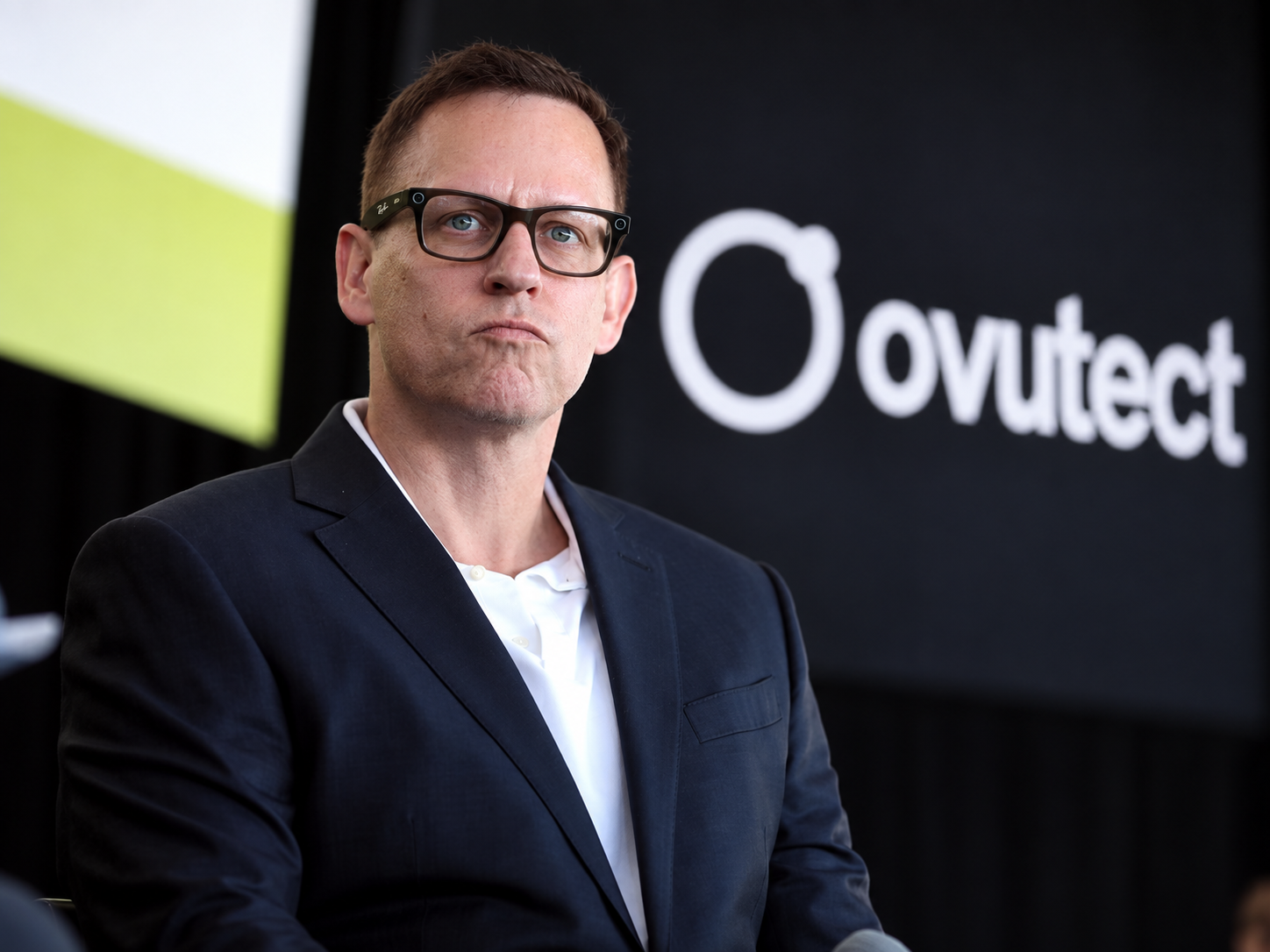
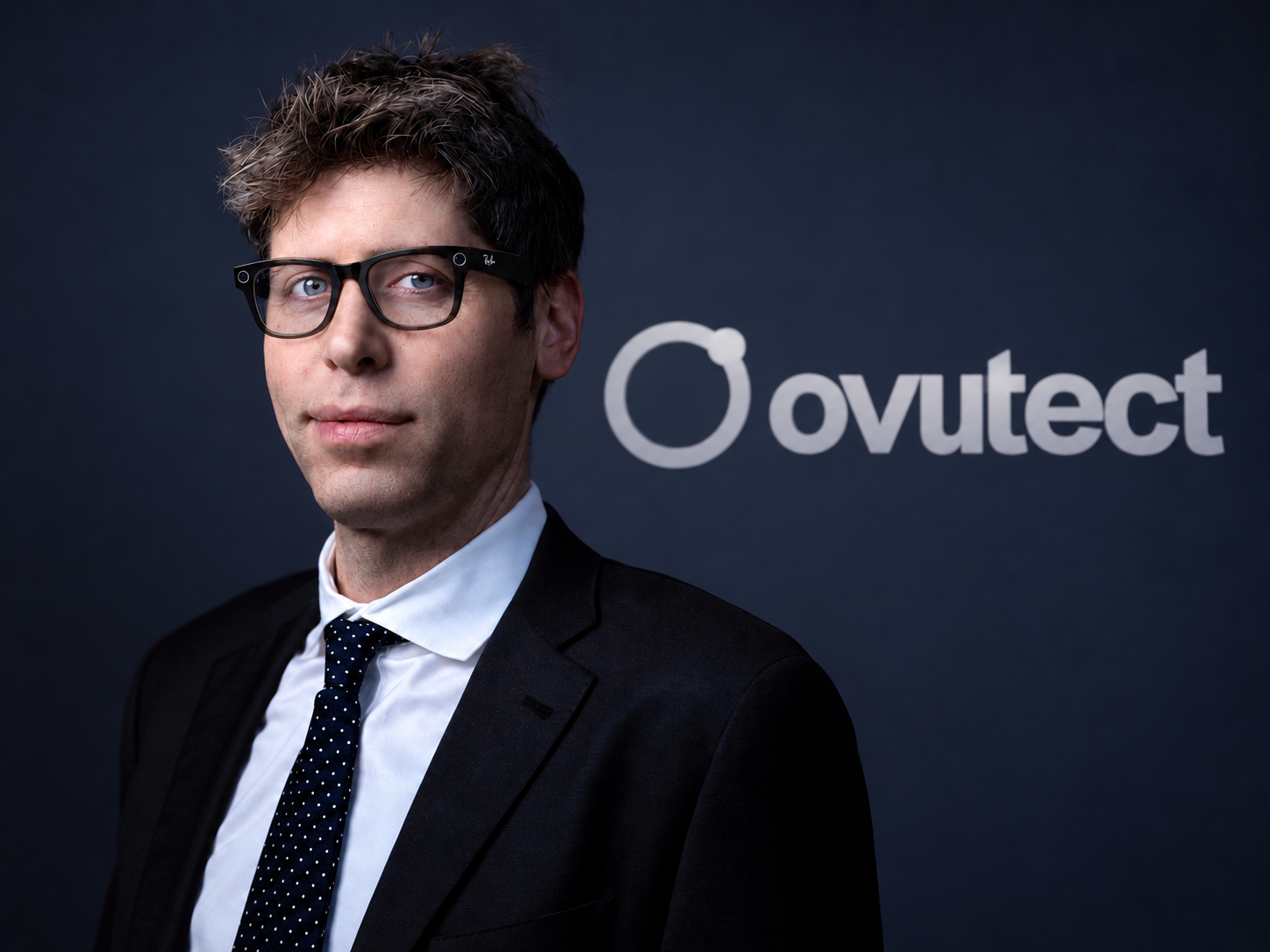
Today, Ovutect’s leadership team consists of:
 CEOLuis “Wilo” GoñiView profile
 CFOAlberto “Faz” OrozcoView profile
 CTOÁlvaro “Minus” CapdevilaView profile
 CAOFrancisco “Corro” GoñiView profile
 CMOPatricio “Phato” AlcocerView profile
 CCOPablo “Pop” AlarcónView profile
Six people.
Completely different stories.
One company that, according to many, should never have been possible.
From the sale of Soaking Inc. to the mountains of Ñañel. From Wilo’s failed jaw-correction technology to the Arancha conflict. From a chlorophyll salesman to a collaboration with Ray-Ban.
Every event led to the same place.
Ovutect.
And perhaps nobody can summarize what comes next better than its own CEO & Founder.
In the words of Luis “Wilo” Goñi:
“We’re here to stay. We’re going to change your life and take it to the next level.”
Private by intention
Reproductive context belongs to you. Our design starts with discretion, minimal exposure, and meaningful control over what you choose to share.
Nobody but you knows what you see through our product, as all information remains protected by confidential safety mechanisms accessible only by you and world-famous footwear tycoon and leading authority on all things feet, Chilo Tejeda.
Principles guiding the product we’re building.
05 A shared commitment
We work with a diverse network of partners and strategic allies who share our commitment to making people’s lives easier through information they couldn’t see before.







06 Events & experiences
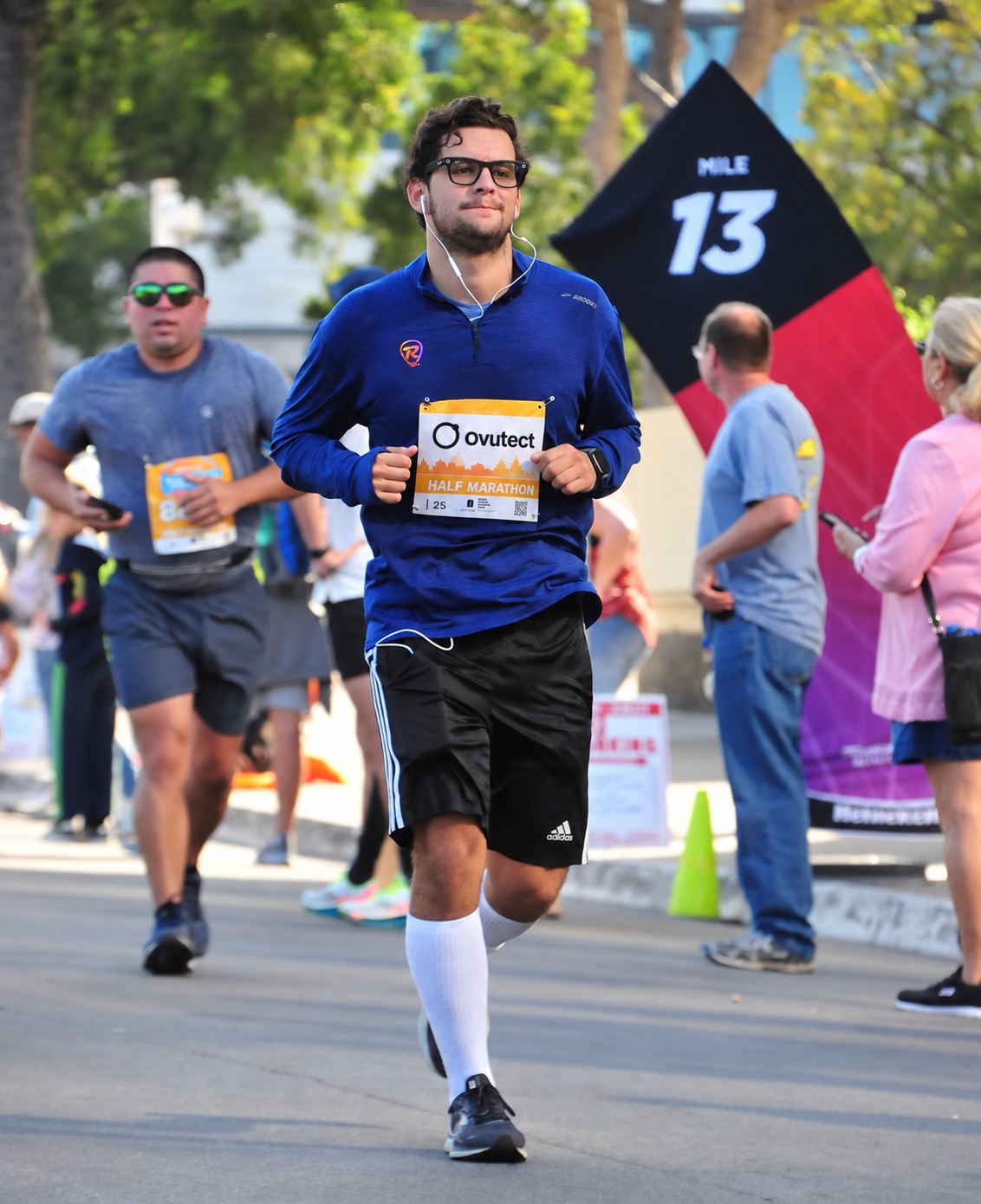
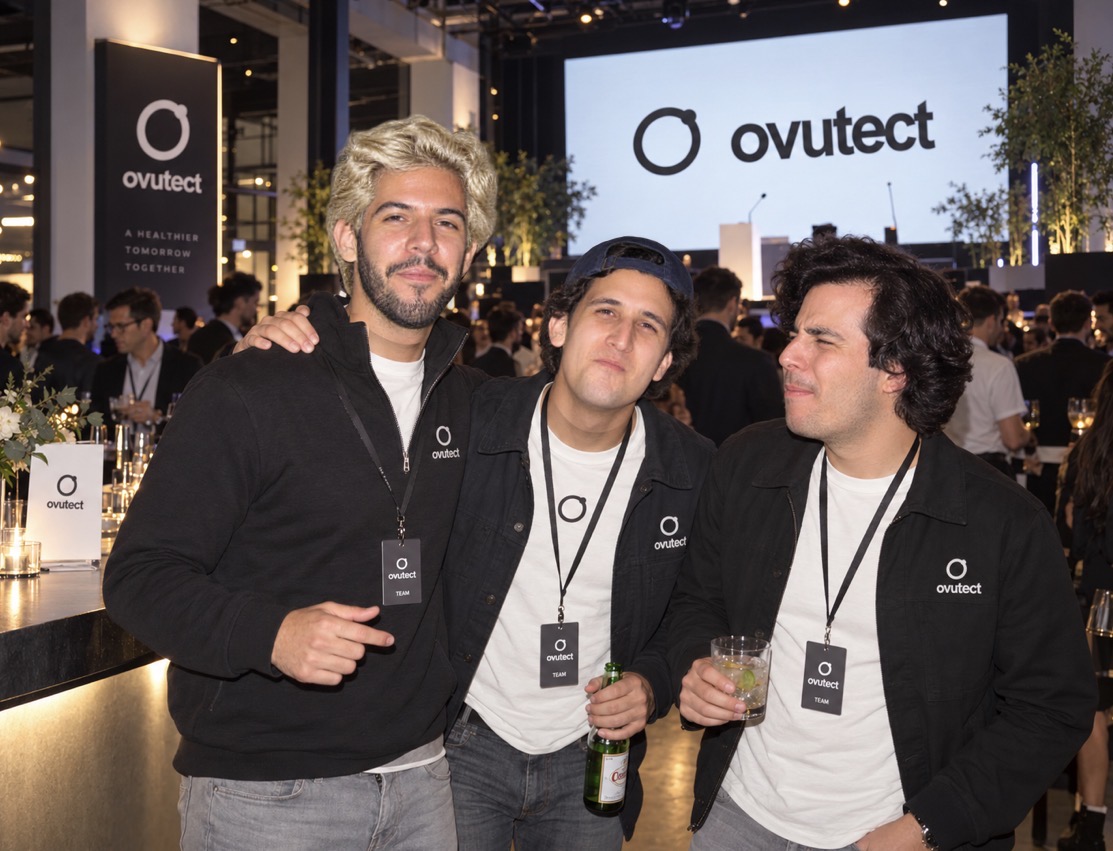
From the beginning, Ovutect has been committed to our users’ health and pleasure. We bring that commitment to life by sponsoring events that celebrate wellbeing, human connection, and the joy of living.
Our next starting line
We’re proud to announce that Ovutect will be among the sponsors of the 2026 Chicago Marathon.
OVUTECT · REPRODUCTIVE CONTEXTUAL INTELLIGENCE
07 Contact Ovutect
Choose the member of our team you would like to contact and send them a message directly.